Guest movement, before it becomes congestion.
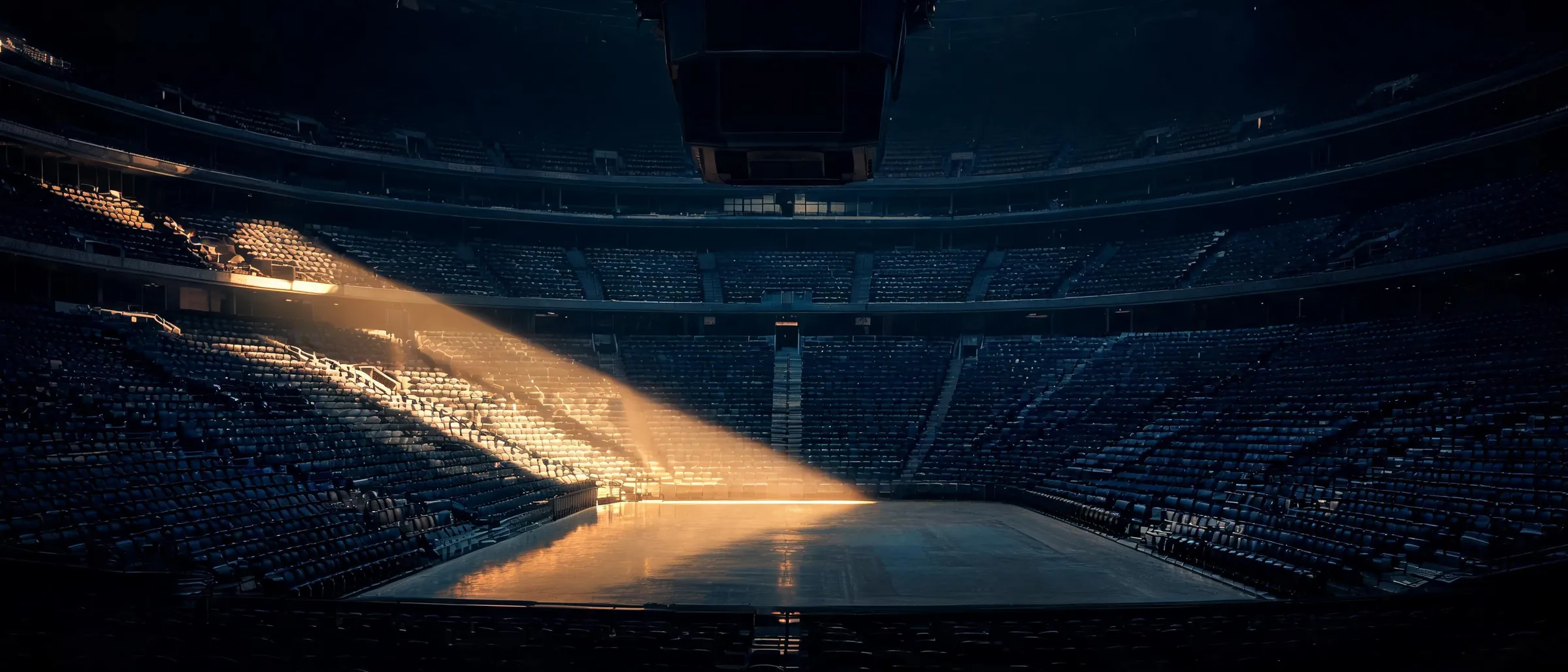
Sports · Events · Premium Hospitality
The doors open at seven. Everything else is decided before then.
John O'Brien runs the operations behind live sports and major events — the guest flow, the suites, the staff cues, and the game-day calls that decide whether a packed building feels effortless or comes apart in public.

Principal
John O'Brien
- 01TD Garden — premium suites & hospitality
- 02Harvard Athletics
- 03USTA / US Open Championships
- 04NCAA championship events
00 The Work
A live event isn't a checklist. It's a system under pressure, in public, with no second take.
By the time the first guest walks in, the night is mostly already won or lost. The work is seeing the whole building at once — where people enter, where staff lose the thread, where premium expectations spike, and where a single dropped handoff changes the tone of the room.
John has spent his career inside that pressure: arena hockey, a Grand Slam, championship weekends, and luxury suites at one of the most demanding buildings in the country. He turns the messy, human parts of an event into a plan a team can actually run when it's loud.
Suite service, before it goes reactive.
Staff roles, before the event starts asking questions.
Escalation paths, before the first public miss.

01 Pressure Map
Four zones. One event-day nervous system.
John works the intersections most consulting decks flatten: physical space, human timing, premium expectation, and who actually owns the call.
Arrival
The first ten minutes decide whether the night feels handled. We map the path from approach to seat — pinch points, wayfinding, the moment a guest forms an opinion — and give staff cues for what people need before they ask.
- Approach & ingress mapping
- Wayfinding & pinch-point relief
- First-touch staff cues
Hospitality
Premium expectation is unforgiving and invisible when it works. We build suite and hospitality service to run ahead of the guest — timing, anticipation, and a recovery move ready before anyone has to ask for one.
- Suite & premium service choreography
- Anticipation & pacing standards
- Quiet recovery before escalation
Team
A plan only works if a tired team can run it at full volume. We turn roles, zones, and calls into cues people actually remember — so the staff knows who owns what before the building asks the question.
- Role & ownership clarity
- Comms cadence under noise
- Cross-zone handoff drills
Handoff
The night isn't done when the doors close. We define escalation paths and the clean handoff back to stakeholders — so a single dropped moment never becomes the story, and the next event starts ahead.
- Escalation & decision ownership
- Stakeholder handoff & debrief
- Post-event operating notes
02 Field Record
A résumé told as pressure, scale, and the texture of service.
Four environments, four very different definitions of "things have to go right."

Arena Hockey
Sacred Heart Hockey, Martire Family Arena
Campus athletics at full tempo — facility flow, fan rhythm, and the operational cadence of a brand-new arena finding its feet.

Grand Slam
US Open Tennis Championships, Queens, NY
National-scale guest movement, layered hospitality, and execution discipline holding steady under enormous public volume.

Championship Weekend
NCAA Lacrosse Championships
Temporary-event pressure: build it fast, run it clean, coordinate a wall of stakeholders, and own competition day end to end.

Premium Hospitality
TD Garden Luxury Suites
Suite-level service where the bar is invisible perfection — timing, anticipation, and a team ready before the guest knows what they want.
03 Method
The deliverable isn't a deck. It's a calmer building.
John translates the chaotic, human parts of live operations into something a team can run without him in the room: clear roles, decided guest paths, a real communications plan, and recovery logic for the moment something slips.
- 01
Audit
Walk the room. Find the pinch points, the soft handoffs, the assumptions nobody's tested.
- 02
Map
Lay out guest flow, service zones, and ownership so the whole event is visible at once.
- 03
Brief
Turn the plan into staff cues and a comms cadence people remember at full volume.
- 04
Run
Be in it on event day — reading the floor, making calls, and closing the night clean.
Start a conversation
Bring the venue, the date, and the part that keeps you up at night.
Start with what has to run better. John can help shape the operating plan well before the room fills.